
9. Targeted Advocacy and Outreach
Through targeted advocacy at national and international decision-making levels, the Norwegian Helsinki Committee ensures that states respect and protect international human rights, democratic principles, accountability, and the rule of law.
We engage with Norwegian decision-makers, civil servants, civil society, academia, businesses, and the legal sector in Norway. We organise events, offer meetings with partners, and organise Campaigns, alone or jointly with other human rights organisations.
We have experienced that it means a lot to decision-makers to meet with our partners, hear their stories, and learn from their experiences. The NHC invited partners from Ukraine, Russia, and Azerbaijan to Norway. By doing this, we also provide a platform for our partners to appeal to Norwegian audiences and media and access first-hand information.
Internationally, we provide regular inputs to the Council of Europe (CoE) and the Parliamentary Assembly (PACE), the OSCE Human Dimension and the Parliamentary Assembly (OSCE PA), UN bodies such as the Human Rights Council, UPR processes, and other international forums. We organise side events, issue statements, collaborate with other organisations on joint statements, offer our comments in relevant media, and are active in various social media. In 2024, the NHC received participatory status with the CoE, Europe's foremost interstate human rights organisation.
In 2022, the NHC initiated the Coalition for International Criminal Justice (CICJ) with influential international justice actors and organisations. In 2024, CICJ statements addressed internal and external challenges for the International Criminal Court (ICC). It urged ICC States Parties to govern the ICC more incisively, including experts from professional domestic judicial or prosecutorial administrations in their delegations to the ICC Assembly of States Parties.
The NHC and Corisk continued efforts connected to the Russia sanctions evasion project. At the OSCE PA winter session in Vienna, the NHC organized a side event about sanctions evasion hosted by the Norwegian, US, and Ukrainian delegations. Bill Browder, the leader of the Global Magnitsky Justice Campaign, participated. Seventy parliamentarians were briefed on non-compliance with US and EU sanctions against Russia, including the lack of export controls on war-critical goods and how countries can close gaps and improve the enforcement of sanctions. Later in the year, during Arendal week, the NHC participated in a panel debate on sanctions against Russia and the detection of circumvention strategies, which the law firm Wikborg Rein organised.
The Russian opposition leader, Alexei Navalny, was murdered in a Siberian prison colony on February 16, 2024. His tragic death caused grief and sparked strong reactions both in Russia and around the world. Together with hundreds of mourners, we marked his death in front of the Russian Embassy in Oslo.
On February 24, we marked two years of full-scale war in Ukraine with an online message from Oleksandra Matviichuk, the director of our longtime partner, the Nobel Peace Prize laureate Centre for Civil Liberties. Later in the spring, we organised a one-day event to focus on Ukraine’s needs after 10 years of war. We invited Ukrainian experts, civil society representatives, and representatives of the Nansen Support Programme for Ukraine and other Norwegian government bodies and organisations.
The HUMAN International Documentary Film Festival was arranged in Oslo in March. The NHC has been a partner since the start. This year, we presented several films about Russia, including documentaries about the imprisoned Memorial historian Yuri Dmitriev, Russian lawyers targeted by the government, and the LGBTIQ+ situation. We also introduced a film about Belarus and participated in a pre-talk before a theatre play about the situation of Ukrainian women. Secretary General Berit Lindeman served on the festival’s human rights award jury.
The Arendal Week is a yearly democracy week in southern Norway that brings together political leaders, businesses, and organisations. This year, our main themes for discussion were Ukrainian democracy and the rule of law in the world today. Oleksandra Romantsova from the Nobel Peace Laureate Centre for Civil Liberties was among our guests. On the last day, the organising committee for Arendal Week, in cooperation with the NHC, invited Yulia Navalnaya, the widow of the late Alexei Navalny, to Arendal for an exclusive interview on the main stage.
Anna Politkovskaya said that ’if we don’t stop him in Chechnya, Putin will come for Europe’. At this year’s annual Anna Politkovskaya Seminar in mid-October, we shed light on the legacy of the Chechen wars to explore the accuracy of Anna's predictions. Prominent guests such as human rights lawyer Karinna Moskalenko, Oyub Titiev (Memorial), Tatiana Britskaia (Novaya Gazeta), Olga Sadovskaya (Crew Against Torture), Grigory Shvedov, (Caucasian Knot), and NHC’s Usam Baysayev (Natalia Estemirova Documentation Centre), participated at a packed seminar at the House of Literature in Oslo.
One of the Russian human rights organisation Memorial's founding members, Oleg Orlov, was released in August in a significant prisoner exchange between Russia, the U.S., Canada, and European countries, including Norway. In September, he joined us for a breakfast meeting in Oslo, where he talked about his experience as a political prisoner. Later, the Guardian’s Luke Harding spoke with the NHC’s Aage Borchgrevink about his book on Russia’s bloody war and Ukraine’s fight for survival.
Norway has played a leading role in the UN in promoting resolutions recognising the role of human rights defenders and underlining the obligations of states to secure an enabling environment for their work. Still, human rights defenders experience refusals when applying for visas to go to Norway, particularly multi-entry Schengen visas. Throughout the year, we have advocated to the Norwegian Ministry of Justice and Public Security that special arrangements should be implemented to facilitate life-saving visas for defenders.
It is important to provide human rights defenders with the possibility of an orderly preliminary retreat. We are proud partners in the program Breathing Space City, in which a limited number of exposed human rights defenders get the chance to stay in Oslo for a few months.
The NHC’s Christmas Campaign “We will not be threatened into silence” brought attention to women political prisoners in our countries. We made a calendar highlighting some of the imprisoned women's terrible stories and supporting them. Through 2025, we hope the calendars will bring attention to all the women political prisoners we advocate for.
A Year of Elections
2024 was a year of over 60 elections worldwide. Even though the most high-profile election with a significant impact on the global community occurred in the USA, the NHC followed closely the elections in our areas. Elections in authoritarian countries like Russia and Azerbaijan were mere formalities—a ritual rather than a valid exercise of democracy.
Russia
We marked the Russian elections by inviting political scientist Ekaterina Schulmann and Ekho editor Maxim Kurnikov and arranging an event where they elaborated on the significance of the rigged elections, in which no real opposition candidate is allowed to participate. We facilitated advocacy meetings with Norwegian politicians and decision-makers.
Azerbaijan
Azerbaijan held snap elections in September. The OSCE ODIHR described them as ‘not competitive, held in a restrictive environment, and falling well short of democratic standards’ and a ‘contest devoid of competition’. We gave several interviews with the Norwegian and international media.
Moldova
The Presidential elections in Moldova were a potential turning point for the country. Even though a pro-European candidate won the elections, there were reports of unprecedented electoral interference by Russia. The NHC monitored the situation in Moldova and gave media comments.
Georgia
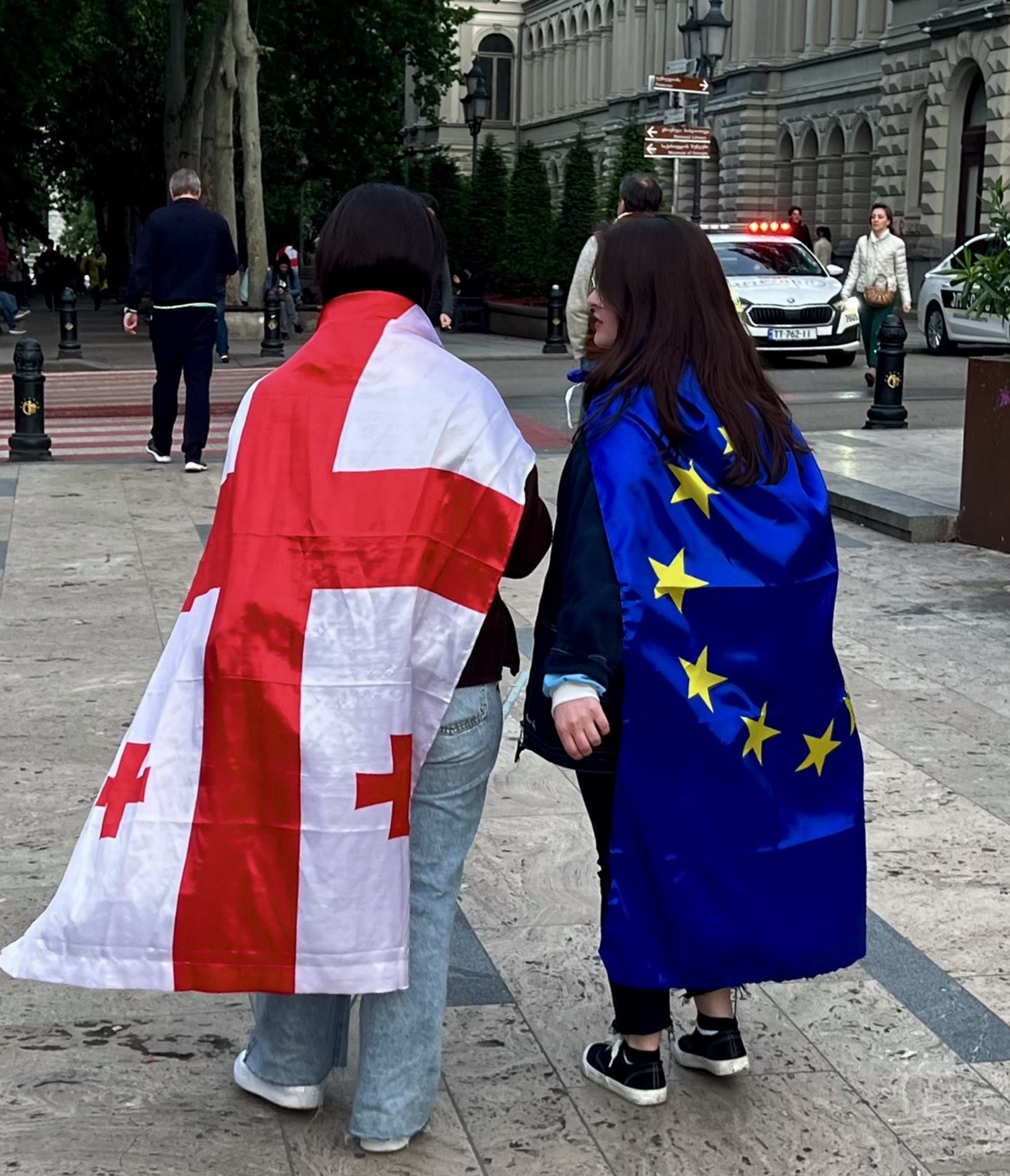
Georgia entered a decisive phase in 2024. The elections were potential turning points, signalling society’s demands for change from Russian influence on European adaptation. The ruling party passed several laws, such as a ‘foreign agent’ law and an ‘anti-LGBTIQ+’ law, to hinder civil society from playing an active role in the elections. We focused our advocacy on Georgia and followed developments leading up to the election. In June, we visited the country and met with civil society organisations, independent media outlets, lawyers, and minority groups. Before the November elections, we held an event about the situation. The NHC observed the elections through our collaboration with the European Platform for Democratic Elections (EPDE). The NHC observers conducted media interviews and contributed to an election report, documenting election result falsification. The street protests of the Georgian people after the elections show the readiness of citizens to protect their European future. Both the elections and protests were monitored closely through our communications output.
NGO Forum
The NHC hosts the secretariat of the NGO Forum for Human Rights, a network of more than 40 human rights and humanitarian organisations. The network regularly meets the Norwegian Ministry of Foreign Affairs to give input to Norwegian policies in the UN and the Council of Europe. The Forum also drafts alternative reports for the UN Universal Periodic Review of Norway and a few treaty bodies. It engages in dialogue with Norwegian authorities on implementing UN human rights recommendations.