
4. Defending the defenders – Supporting people at risk
The Norwegian Helsinki Committee supports human rights defenders in authoritarian states in Eastern Europe and Central Asia. We believe it is vital to strengthen those working inside the country to promote human rights, democracy, accountability and the rule of law. Human rights initiatives must come from within, from actors who know the situation well. They are aware of societal norms and political and legal traditions and are often well-known and respected by the population. At the same time, human rights defenders are considered the most at-risk individuals in most countries where we work.
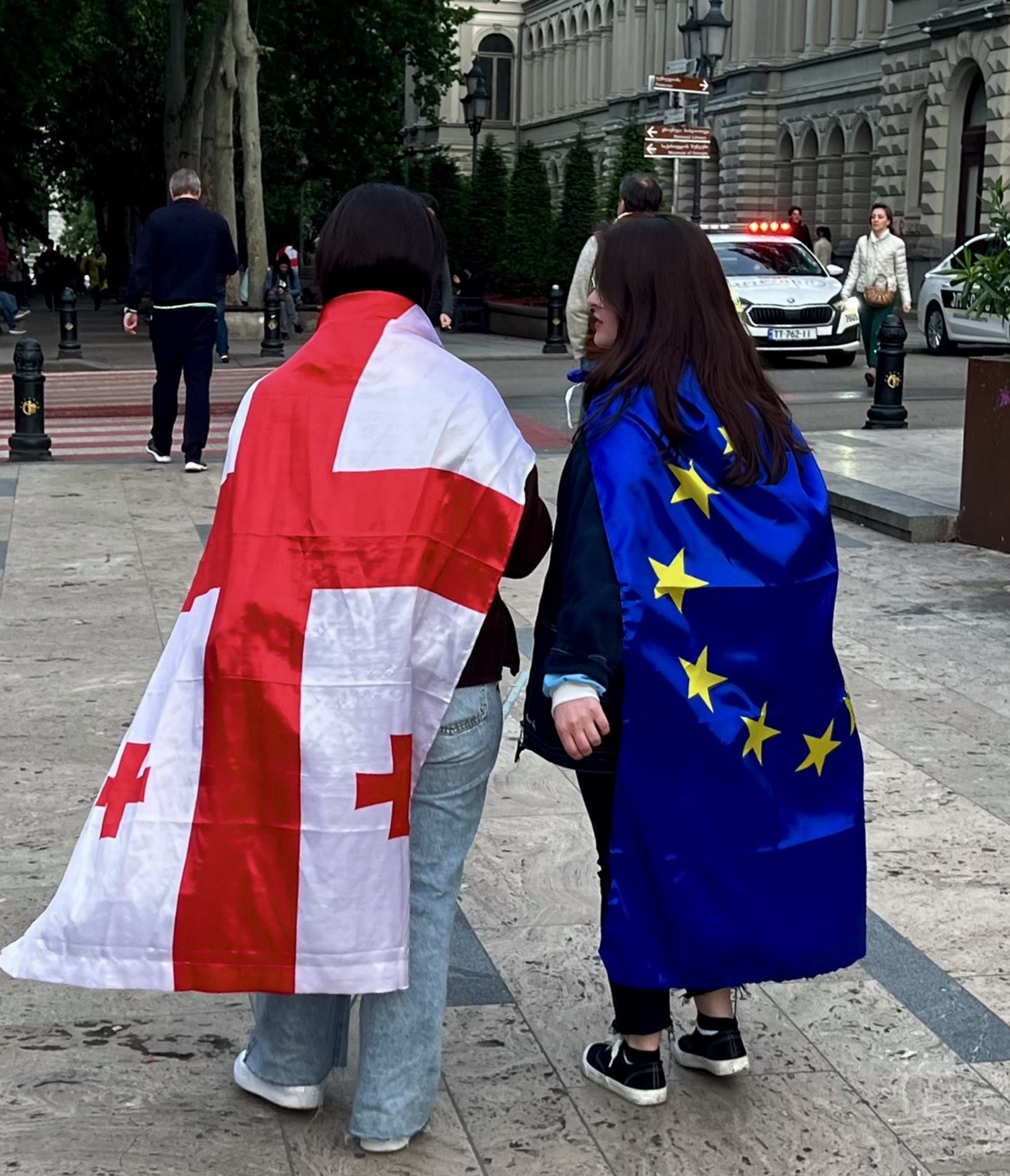
Rather than engaging in dialogue and interaction, authoritarian leaders see them as threats to their power. That is why they have adopted laws to portray human rights defenders as ‘foreign agents’, ‘extremists’ and even ‘supporters of terrorism’. Despite increasing pressure, politically motivated arrests and trials, and the expansion of ‘foreign agent’ and ‘anti-LGBT propaganda’ legislation across Russia, Kyrgyzstan, Georgia, Kazakhstan, Uzbekistan, Türkiye, and Hungary, human rights defenders continued to work.
LGBTIQ+
For 15 years, the NHC has been fighting actively for equal rights and dignity for LGBTIQ+ persons. We have been working upstream, but now, anti-LGBTIQ+ backlash is once again on the rise. 2024 was characterized by a surge of ‘anti-LGBT propaganda laws’, police raids of safe spaces for the community, and violent anti-LGBTIQ+ rhetoric rumbling through high-level politics in Europe and around the world.
Still, together with our partners, we are finding ways to break new ground. Thousands of people from the most dangerous corners for LGBTIQ+ persons in Europe and Central Asia have access to legal aid, shelters, support and solidarity. Homophobic and transphobic laws and practices are challenged by all available means. And despite a Supreme Court decision in Russia criminalizing expression of support or associating with the LGBTIQ+ community, we celebrated Barents Pride for the eighth time – expressing support for the LGBTIQ+ community in Russia.
June is Pride Month, and every year, the NHC is part of organising the advocacy platform Oslo Pride Solidarity Program. The platform brings awareness to the challenges for LGBTIQ+ persons in the most hostile environments we work in and promotes the work of our courageous colleagues - who join us for a week during Oslo Pride. This year, we had visits from 16 Ukrainian human rights defenders, who took part in advocacy regarding Norway's bilateral relations with Ukraine, the setup of international funding and humanitarian aid and public panels, and not the least, marched with us under the Ukraine banner at the pride parade.
LGBTIQ+ Ukrainians have particular challenges during wartime. We see that the set-up of international humanitarian aid and support can result in increased marginalisation and that LGBTIQ+ persons do not have access to aid. We have worked with Ukrainian and Scandinavian partners to map this problem and provide recommendations on improving the situation. The Oslo Pride International platform provided opportunities to present our recommendations. Our longstanding partner, Insight Public Organisation, was the first winner of the prestigious Kim Friele Memorial Prize, awarded by the Norwegian government, for their efforts to support the LGBTIQ+ community over many years; including during wartime. Olena Shevchenko, Head of the organisation, challenged humanitarian actors, policymakers and the public on how Norway's engagement in Ukraine could benefit everyone – also the LGBTIQ+ community.
Belarus and our Belarus Fund
This year, through the joint efforts of Belarusian human rights organizations, humanitarian foundations, and the Belarusian democratic movement, an International Humanitarian Fund for Victims of Repressions in Belarus was established. Norway was the first country to contribute to this fund. The NHC was asked to coordinate the initiative, which has received additional support from Sweden, Denmark, and Lichtenstein, among others. The fund prioritises assistance for political prisoners, former political prisoners, and their families, including their children. It is crucial to provide financial and psychological support to individuals who have stood up against the system to fight for their rights. There are still more than 1,200 political prisoners in Belarus, and arrests continue daily.
In connection with promoting the Belarus Fund, the leader of the Belarusian democratic movement, Sviatlana Tsikhanouskaya, visited us and participated in a conversation about advocacy for the release of political prisoners in Belarus and the needs of current and former prisoners and their families.
For the second consecutive year, the NHC has organised a study visit for young Belarusian activists. In collaboration with Belarusian partners and the Nordic Council of Ministers, we allowed ten young activists to visit Oslo, participate in workshops, engage with local human rights organisations, and build valuable networks.
Azerbaijan
Azerbaijan continued the vicious crackdown on civil society that resulted in the arrest of a wide range of civil society actors, including journalists, political opposition leaders, and human rights defenders, under spurious and politically motivated charges. The government aggressively targeted several independent online media platforms. The arrests were linked to highly restrictive laws on civil society and the retaliation against the journalists’ exposing government corruption and human rights abuses.
Azerbaijan hosted COP29, the United Nations Climate Change Conference, in November. Just months before the conference, the authorities escalated repression and prosecuted its critics. We used the opportunity to express concern about the crackdown on independent civil society. We organised meetings in Oslo with Norwegian decision-makers and MFA for visiting Azerbaijani partners, including lawyers and the families of political prisoners. With the assistance of the NHC, some Norwegian journalists and activists met human rights defenders, families and lawyers of political prisoners in Azerbaijan.
Türkiye
In 2024, the NHC expanded our work on Türkiye and started two projects:
Advocates for Change (AfC)
The Advocates for Change Civil Society Support for Türkiye Grant Program 2024-2025 empowers local organisations in smaller cities to strengthen their capacity for activism. The program supports eight organisations working on human rights, LGBTQI+ rights, gender equality, and freedom of expression. The organisations also support human rights defenders and help enhance the resilience of local communities.
FoBI
For over a decade, the NHC's Freedom of Belief Initiative (FoBI) has been a leading voice in monitoring, reporting, and advocating for freedom of religion or belief for all in Türkiye. Despite the country’s obligations under international human rights treaties, longstanding issues remain unresolved, making independent credible monitoring and advocacy vital more than ever.
In 2024, we deepened our focus on freedom not to believe and to advocate for the right to adopt, change, or renounce a religion or belief. Since 2020, we have monitored hate crimes motivated by bias against religion, belief, or non-belief, raising awareness of this underreported issue through annual reports and advocacy. The latest report, published in 2024, continues this critical work. We also actively engage policymakers and human rights organisations to raise urgent concerns and to push for policy improvements to combat hate crimes in all their forms.
We took our advocacy to key international platforms, with submissions to the UN Universal Periodic Review, the Human Rights Committee, the Council of Europe Committee of Ministers, the European Commission Against Racism and Intolerance and the OSCE Office for Democratic Institutions and Human Rights. Our impact was further amplified through a strategic advocacy visit to Strasbourg deepening our engagement with the Council of Europe and reinforcing our push for effective implementation of European Court of Human Rights judgments.