
3. Sanctions as a human rights instrument
3.1. Defining sanctions: a brief overview
Sanctions are measures not involving the use of armed force that are employed by individual states or a collective grouping of states to coerce a particular state, entity or individual (or any combination of these) to conform to the imposing state's (or states') professed requirements (frequently on the basis of international laws or obligations). Under Chapter VII of the United Nations Charter, the UN Security Council (UNSC) has the authority to maintain or restore international peace and security. This includes the imposition of sanctions under Article 41, which provides for a broad range of enforcement options that do not involve the use of armed force. Since 1966, the Security Council has established 31 sanctions regimes targeting various countries and entities.
These Security Council sanctions have taken various forms and pursued a range of goals. The measures have included comprehensive economic and trade sanctions, as well as more targeted measures such as arms embargoes, travel bans, and financial or product restrictions to support peaceful transitions, deter non-constitutional changes, constrain terrorism, protect human rights, and promote non-proliferation. Similarly, sanctions imposed by the EU include arms embargoes, travel bans, freezing of assets and economic sanctions to protect EU values, security and fundamental interests, support the rule of law and human rights, and strengthen international security.
Historically, sanctions have been used for a variety of purposes. While there have been instances where sanctions were imposed for human rights purposes, such as the sanctions against the apartheid regime in South Africa, more often they have been viewed as a political tool. An example of this is the longstanding US sanctions against Cuba, which were (and are) primarily driven by political considerations rather than human rights concerns.
Traditionally, sanctions were usually limited in time and space, targeting a specific state for a defined period. In contrast, new human rights sanctions regimes today are often global in scope and can be imposed indefinitely until certain conditions are met. Furthermore, modern sanctions often target not only states but also non-state actors, including individual officials, companies, and other entities, to deter and punish undesirable behavior such as human rights abuses or other illicit activities.
Unofficial sanctions, such as arbitrary trade bans, also play a role in the history of sanctions. These measures, while not formally imposed by an international body or formally described as sanctions, may nonetheless have significant economic and political impacts. Unofficial sanctions have been used with increasing frequency in recent years, usually by powerful states. While these measures do not fall under the traditional definition of sanctions, they nonetheless serve a similar purpose.
For instance, China's ban on Norwegian salmon in 2010 was widely seen as a response to the awarding of the Nobel Peace Prize to Chinese dissident Liu Xiaobo. It led to a sharp decline in Norwegian salmon exports to China. Similarly, Russia's ban on Moldovan and Georgian wine in 2006, ostensibly for health and safety reasons, was widely interpreted as a political move amid escalating tensions between the Russian government and the two former Soviet republics.
Over the years, sanctions have been subject to various criticisms. One common argument is that they are employed arbitrarily as a political tool. Critics argue that countries may selectively impose sanctions to advance their own geopolitical interests, rather than to uphold international law. While it is true that the implementation of sanctions can be influenced by political considerations, this does not negate their potential as a tool for promoting international norms. Sanctions can serve as a powerful signal to states and entities that their actions will not be tolerated by the international community. This is particularly true of sanctions imposed as a result of persistent and serious violations of universally accepted human rights norms and values.
Another argument against sanctions is that they are applied inconsistently across different contexts. Critics point out that some countries with poor records of international law compliance are not sanctioned due to their strategic importance. While consistency is indeed a challenge, it is important to note that the absence of sanctions does not necessarily imply tacit approval of international law violations. Other diplomatic tools, such as dialogue and engagement, may be used in conjunction with or instead of sanctions, depending on the situation. Moreover, the development of multilateral sanctions regimes, such as global human rights sanctions, can help to ensure a more consistent and coordinated international response to violations of international norms.
The third criticism is that sanctions can have adverse effects on the local populations of the targeted countries, potentially causing more harm than good. Indeed, a study assessing the effects of economic sanctions on Iranians' right to health, found that sanctions led to a deterioration of people's overall welfare and ability to access necessities of life such as nutritious food, healthcare, and medicine. Sanctions may have not only negative humanitarian consequences, but may also backfire politically in that they confer (internal) legitimacy on the governments and regimes they are intended to deter or punish, for instance by laying the groundwork for an "us versus them" narrative that can be proffered by the relevant regime to create internal unity against the "outside world".
However, the overall picture is mixed. A study by Gutmann, Neuenkirch & Neumeier (2019) provides a comprehensive empirical analysis of the effects of economic sanctions, and it offers some interesting insights into the argument that sanctions in general have adverse effects on the local populations of the targeted countries. The study finds that economic sanctions do not necessarily lead to a deterioration of the humanitarian situation in the targeted country. In fact, they find no support for the adverse effects of sanctions on the economic situation, political and civil rights, or basic human rights. With respect to women's rights, their findings even indicate a positive relationship.
This study suggests that the impact of sanctions is more nuanced and complex than often portrayed, and that sanctions can, in fact, have a positive impact on local populations in targeted countries. Indeed, when a country faces comprehensive sanctions by a largely united international community, it might also lead to increased international scrutiny and pressure to improve its human rights record.
Sanctions should therefore not be discarded as a tool for promoting international norms. But their mixed history underscores the need for careful design and implementation to minimize adverse humanitarian impacts, and to close loopholes that enable violation or circumvention. This could include measures such as humanitarian exemptions, targeted sanctions that focus on individuals and entities responsible for violations of international law, and the use of assessment tools to predict and mitigate the potential effects of sanctions, as well as tighter regulation and increased enforcement. To improve the use of targeted human rights sanctions or Magnitsky sanctions, which they are frequently referred to as, a criteria-based approach can be developed, reducing arbitrariness and politicization.
3.2. The impunity gap and Russia
In general, the international human rights protection systems in the UN and regional organizations, such as the Council of Europe, lack sufficient tools to hold states and individuals accountable for grave human rights violations and international crimes. This impunity gap is perhaps the most concerning human rights issue today.
Russia’s increasing aggression, from the armed conflict in Chechnya in 1999, via the invasion of Georgia and the intervention in Syria, to Ukraine, is a case in point. There have been many crimes, but little punishment. The so-called Chechen cases from the European Court of Human Rights are a catalogue of grave abuses, including the systematic use of torture and enforced disappearances on a massive scale. While Russia has paid compensation in line with the Court's decisions, it has consistently failed to introduce general measures aimed at preventing similar violations in the future. This was a clear contravention of its obligations as a (then) member of the Council of Europe and under its own domestic laws.
The international legal system operates on the assumption that states will act in good faith. However, when states fail to do so, the Security Council is the primary body that can impose sanctions. In Russia's case, its permanent position on the UNSC effectively shielded it from such international repercussions. This has led the EU, the US and a number of other states to impose sanctions unilaterally, bypassing UNSC resolutions. This type of unilateral action highlights the growing role of regional and national sanctions as tools for accountability.
The lack of a forceful political and legal response to violations of human rights in Chechnya may have emboldened Vladimir Putin. The Russian leadership appears to have concluded that armed conflict remains a useful way of consolidating and projecting power, in spite of the fundamental international norms prohibiting the use of force in the UN Charter and several other treaties and agreements that the Russian Federation has committed to. War can also be a way (or “political technology”, to use a phrase often employed by pro-Kremlin think tanks) of deflecting attention from domestic issues, such as extreme economic inequality, corruption and the erosion of rights and freedoms.
Russia further appears to have concluded that there is no need to respect basic humanitarian norms in armed conflict, even though it is a signatory to the Geneva Conventions and other international humanitarian law treaties. Russia was an original signatory to the Rome Statute, following the annexation of Crimea and military intervention in eastern Ukraine, Russia withdrew its signature in 2016, signaling that it did not consider itself subject to the jurisdiction of the International Criminal Court (ICC).
Unfortunately, and for a number of reasons, the sanctions imposed by Western states after 2014 did not deter Russia from launching its full-scale invasion of Ukraine in February 2022. The current war has plunged the world into a multi-layered security crisis, and underscores the need to address the impunity gap, which is a driver of armed conflict.
3.3. The rise of global human rights sanctions
Ironically, Russia inspired the first human rights-targeted sanctions regime. The Magnitsky Act, named after a whistleblower who exposed corruption and was killed in a Moscow prison, was passed by the US Congress in 2012. Since then, Magnitsky type sanctions regimes, targeting individuals and companies by freezing their assets and denying them visas, have been adopted in many jurisdictions across the world to counter impunity for human rights abuses, international crimes and grave corruption.
While the original intention was to punish a group of Russian officials, the sanctions model has developed into a much wider and more permanent sanctions regime, sometimes referred to as global human rights sanctions. To a degree, the Magnitsky campaign has contributed to changing the use and function of sanctions as a tool. From being applied in specific circumstances directed at particular states and regimes in a given time frame, human rights sanctions are now emerging as a global tool in the struggle to close the impunity gap.
However, these sanctions have not been without criticism. Similar to arguments made against sanctions in general, skeptics argue that human rights sanctions can be used as political tools, applied inconsistently, and potentially harm local populations. Yet, these criticisms are challenged by evidence suggesting that such sanctions can serve as a powerful signal to human rights abusers, be applied in a consistent and coordinated manner, and do not necessarily lead to a deterioration of the human rights situation in the targeted country (especially considering these sanctions primarily target specific individuals and entities with a track record of human rights violations, thus largely avoiding the wider impact on uninvolved individuals that may result from country- or region-wide sanctions). In fact, historical examples such as the South African apartheid regime suggest that sanctions can lead to significant positive changes from a human rights perspective. To further enhance the effectiveness and consistency of these sanctions, there are proposals to establish a European, and potentially international, commission to promote criteria-based sanctions, aiming to standardize and improve the human rights sanctions regimes.
The US, Canada, and the UK have the most developed human rights sanctions regimes. The EU has also adopted a human rights sanctions regime, but with fewer designations (applications) to date. The sanctions are ‘targeted’, freezing assets, denying entry, and excluding designated individuals from financial services. The targets to date are mostly officials who have abused their position and committed serious human rights violations or who are involved in significant corruption. A recent example is the UK's imposition in July 2023 of sanctions in response to Russia's forced deportation of Ukrainian children. The EU regime covers only human rights abuses, but a proposal to include significant corruption is pending. The mechanisms have improved with respect to safeguarding due process from political intervention and protecting the rights of individuals and (in some jurisdictions) companies placed on the list.
In general, Magnitsky sanctions are motivated by two main aims. The first aim is to change the behavior of the targeted persons, prevent further abuses, and signify to the victims that democratic countries recognize the wrongdoing against them. A second, connected, aim is that targeted sanctions can be a tool to fight impunity in cases where there is no justice domestically and limited possibilities for foreign countries to prosecute the acts in question under universal jurisdiction principles.
An additional, related idea is that the impunity gap also represents a security concern. Historically, authoritarian regimes have often used armed conflict to gain legitimacy and power. If committing serious international crimes and waging illegal wars have no consequences except political and financial dividends, the threshold for new armed conflicts is low. Behavior that is rewarded, and not punished, will usually be reinforced. Impunity drives armed conflicts, as aptly illustrated by Russia under Putin.
It is difficult to measure the impact of Magnitsky type sanctions but given the reactions against the Magnitsky campaign from authoritarian regimes, it seems likely that they are taken seriously by individuals and companies with business and assets in Western countries, and that they may have an adverse impact on the "business models", as it were, of many contemporary authoritarian states. In these states, elites often control most domestic assets and harvest the main cash flows, yet they prefer to invest their wealth in Western countries, which usually have independent courts, rule of law and safer business environments.
Global human rights sanctions are transformative in several ways. Firstly, they have contributed to making sanctions less politicized (at least from the perspective of those who recognize universal human rights norms). By focusing on human rights abuses and corruption, these sanctions move beyond the political disputes that often characterize traditional sanctions regimes. They establish a clear set of criteria for designation, based on universally recognized human rights norms and anti-corruption standards.
Secondly, although doubts remain about their coherent implementation across the world, these sanctions have a global reach. Unlike traditional sanctions, which are often limited to specific states or regions, global human rights sanctions can be applied to individuals and entities anywhere in the world. This global scope enhances their potential to deter human rights abuses and corruption and promotes a more uniform approach to accountability.
Finally, these sanctions are transformative in their permanence. While traditional sanctions are often imposed for a specific period, global human rights sanctions remain in place until the targeted individuals or entities have addressed the issues that led to their imposition. This permanence underscores the seriousness of the abuses being addressed and the sustained commitment to holding perpetrators accountable.
In conclusion, the rise of global human rights sanctions represents a significant evolution in the use of sanctions as a tool for promoting accountability and human rights. By making sanctions less politicized, more global, and more permanent, these measures are reshaping the sanctions landscape and offering a powerful new tool in the fight against impunity.
3.4. Russia sanctions as a human rights instrument
In the wake of Russia’s annexation of Crimea and aggression in eastern Ukraine in 2014, the EU imposed wide-ranging sanctions on trade, financial services, the energy sector, as well as officials and companies connected to the Russian war effort in order to “weaken Russia's economic base, depriving it of critical technologies and markets and significantly curtailing its ability to wage war.” After the full-fledged invasion on 24 February 2022, the EU has strengthened sanctions in eleven packages (so far) that are unprecedented in scope. The US, the UK and a number of other states in the sanctions coalition of almost 40 states have also imposed sanctions on Russia.
The distinction between targeted sanctions, imposed to fight impunity and prevent individual wrongdoing, and the sanctions against broad sectors of the Russian economy (including energy and finance) with an aim to undermine Russia’s ability to execute the war, is not always explained. The various sanctions serve different purposes, but the main aim is to weaken Russia’s capacity to wage an illegal war (of aggression) against Ukraine, among other things characterized by blatant disregard for the laws of war.
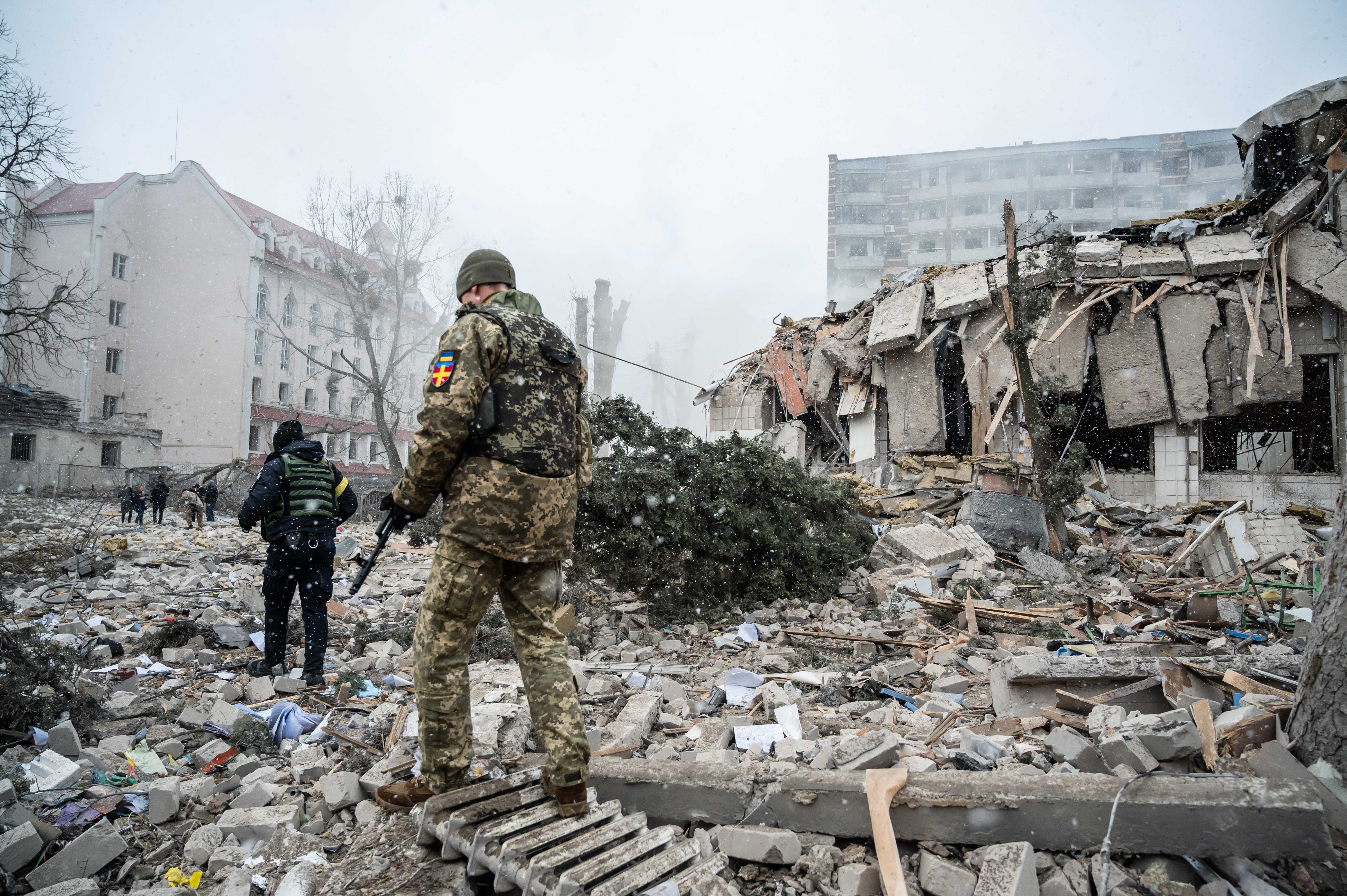
The many violations of humanitarian law appear to be a feature of Russian warfare, as they are not stopped or punished by officials higher up the Russian chain of command. Rather they appear to be systematic and widespread, as if terror against civilians and non-combatants is part of the toolkit of the armed forces and security services active in the occupied areas. Starting in 2014, human rights groups have noted that the widespread and systematic nature of certain crimes, such as the persecution of Crimean Tatars and pro-Ukrainian individuals in occupied Crimea, may have amounted to crimes against humanity.
The current wave of crimes has reinforced the argument that some of the gravest international crimes are unfolding in Ukraine. The UN Commission of Inquiry on Ukraine has concluded that war crimes and allegedly crimes against humanity has taken place, but the more investigation is needed to conclude on the second crime. The widespread and systematic nature of crimes coupled with statements by Russian leaders, such as President Vladimir Putin, that seem to deny the existence of a separate Ukrainian nationality and sovereignty, have led some observers to ask whether the war may have a genocidal trait, i.e. that the war is intended to partly or wholly, destroy the Ukrainians as a distinct national and political community.
The recent arrest warrants issued by the International Criminal Court against President Vladimir Putin and Russia’s Federal Commissioner for Children, for the forcible transfer of populations (children) indicate a willingness by the Court to target the top leadership for war crimes. The statement by the ICC Prosecutor, Karim Khan, refers to the crime of aggression as the context of these crimes. International efforts to establish a special tribunal to prosecute this crime are ongoing as the ICC does not have jurisdiction for this crime in Ukraine.
The Russian invasion of Ukraine is thus connected to some of the darkest chapters in European recent history and characterized by violations of international law. The sanctions against Russia clearly serve a human rights purpose in that they are an attempt to stop the illegal war and the crimes currently being committed in Ukraine. In this respect, some of the export controls, such as bans on dual-use and other goods critical for the Russian armed forces and military industry, are particularly important.
To conclude, the sanctions against Russia illustrate how sanctions are emerging as an international human rights instrument. The various forms of restrictive and punitive measures against the state, companies, and individuals are united by a human rights purpose. These measures, ranging from targeted sanctions against individuals to broad economic sanctions against sectors of the Russian economy, are all aimed at curbing Russia's capacity to wage an illegal war and commit human rights abuses. They represent a concerted international effort to hold Russia accountable for its actions and to deter further violations.
This use of sanctions as a tool to further respect for human rights and accountability marks a significant evolution in the international community's approach to dealing with states that violate international norms and laws. While enforcement, notably to prevent and deter violations and circumvention, is still lagging behind, as we shall see in the subsequent chapters, this development has consequences for all stakeholders. For companies at risk of violating sanctions, the stakes are high. Not only do they risk being investigated or fined for violating sanctions laws, in grave cases, they could become complicit in international crimes, and risk criminal prosecution as well as civil complaints (as described more fully in chapter 4). There are also substantial reputational and commercial risks, as described in chapter 5.