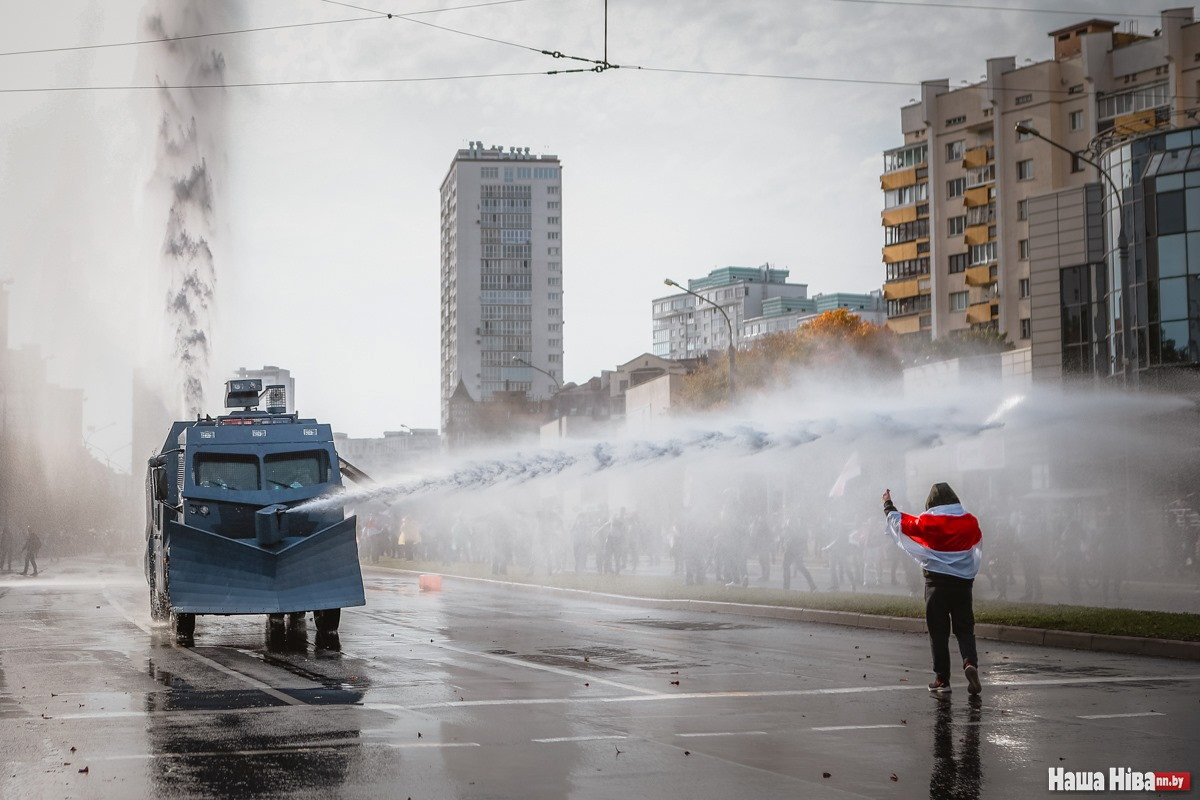

We are stronger together
The Central Europe and EEA section
2020 was a year of continued democratic setbacks in Central Europe. Therefore, the NHC has strengthened its focus on this region.
– We used to think we had our work cut out in terms of tackling the challenges to democratic institutions throughout Europe. The Covid-19 pandemic has certainly added several extra layers to these challenges. From regimes that used the outbreak to clamp down on critics and opponents more vigorously, to civil society organizations seeing their efforts thwarted by increasing restrictions on activities, we have experienced a year that we can hardly find a match to in recent times, says Csilla Czimbalmos, who headed NHC’s work on Central and Eastern Europe throughout 2020.
The NHC is in a special position to evaluate and follow-up on developments in countries in Central and Eastern Europe through its role as contact point for bilateral relations under the EEA Grants’ Active Citizens Fund.
– This role gives us an opportunity to actively contribute to the efforts of strengthening civil society in Europe. We work closely with the independent fund operators of the Active Citizens Fund in 14 beneficiary countries and increase awareness about the challenges that are facing all our societies, regardless of borders, says Czimbalmos. – We encourage organizations from Norway to partner up with organizations from the beneficiary countries in finding solutions to these challenges.
125 partnerships have been established so far between Norwegian entities and organizations from Bulgaria, Slovakia, Greece, Estonia, Portugal, Poland, Romania, Lithuania, Latvia, Slovenia, and Croatia.
NHC also raised awareness about human rights challenges in Central Europe through media articles and online public events. The events focussed on the government’s undermining of rule of law in Poland, dictatorial tendencies in Hungary, corruption in Bulgaria, and an antidemocratic slide in Slovenia.
To help counteract the negative tendencies in the region, the NHC is engaged as an expertise partner in a regional project bringing together organizations from Bulgaria, Serbia, Slovakia, Romania, Hungary, Poland, and the Czech Republic. This project aims to broaden the grassroot basis and the constituencies of civil society organizations through trainings and mobilizing activist groups previously not involved in larger networks. At the same time, it aims to link the local and the European level by jointly developing the outlines of a comprehensive common European civil society policy.
– We believe in this type of cooperation first and foremost because by standing together we know we are stronger and have a more powerful impact. By working together, we also learn from each other and can improve our own practices. This is what Europe needs today.