
Documenting war crimes, facilitating justice
The Documentation and Accountability Hub (DAH)
The Norwegian Helsinki Committee’s dedication to documentation and accountability was put to the test in the past year – and proved its worth.
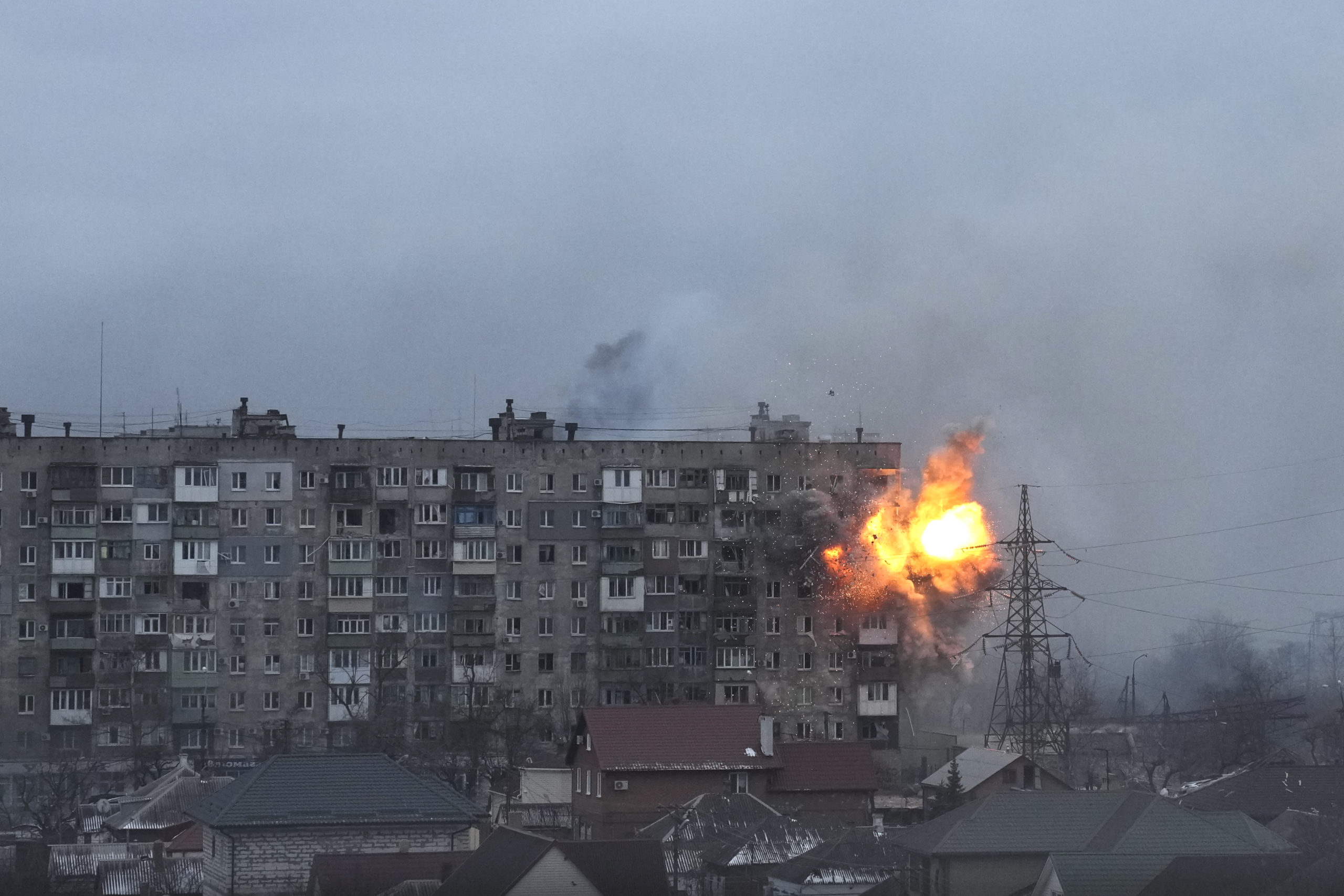
Russia’s full-scale invasion of Ukraine on 24 February 2022, resulted in enormous challenges for our work on documentation and accountability. However, due to our decade-long experience with often meticulous documentation work, we were able to design and start implementing new programs in a short period of time. We had the tools, experience, network, and expertise needed to increase documentation of numerous war crimes, crimes against humanity, and human rights violations taking place in the context of the war.
The origin of the NHC’s documentation work is the Natalia Estemirova Documentation Centre (NEDC), which was established in 2010 and still constitutes an important part of DAH’s work. It has become the world’s largest archive of human rights violations and international crimes committed in Russia’s North Caucasus region gathered and analysed in a database. It uses the Investigation Documentation System (I-DOC), an IT program developed by Case Matrix Network (a department of our partner CILRAP), drawing on methods and terminology from the International Criminal Court (ICC).
The NEDC methodology and database solutions have since been applied to several conflict situations in different countries, and in Ukraine since 2014.
Our main Ukrainian partner is Truth Hounds, which was established in 2014 and has developed into a professional organization specialised in documenting war crimes. In 2022, their capacity and ability to work in a difficult environment was really put to the test.
Thousands of victims, witnesses and suspects in incidents that may amount to war crimes and/or crimes against humanity have been registered in our database, which is similar to that of NEDC, but tailored to the Ukraine situation. The details are based on meticulous collection of data in the field.
In the summer of 2022, the NHC concluded a partnership agreement with the Ukraine’s 5 AM Coalition, in which they agreed to entrust their documentation the database, to help build war crime cases. The 5 AM Coalition brings together 30 organizations and initiatives documenting international crimes in Ukraine, and we expect it to contribute significantly to the database collection of documents, videos, pictures, audio recordings, etc.
In parallel with the documentation programs in Ukraine, our work on the collection and analysis of documents, audio recordings, and footage about international crimes and grave human rights violations during the second war in Chechnya continued unabated. The numbers speak for themselves: We have access to more than one million sources documenting atrocities in the two Chechen wars.
With the help of the NEDC database, experts analyse cases, identify profiles of victims and suspects, and build criminal or human rights cases. Such cases will hardly be prosecuted by Russian authorities in the foreseeable future, but justice may be served by democratic states applying universal jurisdiction. In addition, the NEDC submits cases with identified perpetrators to Magnitsky sanctions lists in various countries, based on evidence from the database. Such sanctions include entry ban and assets freeze.
NEDC identified Russian military personnel involved in international crimes in the second Chechnya war over 20 years ago that are now involved in similar crimes in the Ukraine war. The functions of the I-DOC database enable such finding and makes it easy to gather relevant documentation.
For years, the NHC has advocated that Norway and other democratic states should cooperate on applying targeted sanctions (often referred to as Magnitsky sanctions) to step up their fight against impunity. The 2021 Norwegian Sanction Act enables the government to freeze assets, deny entry and to put in place other measures against human rights violators who will not face accountability domestically.
Based on analysis by the law firm Wikborg Rein, the NHC published a report on the Norwegian Sanction Act. So far, the Government has applied the Act to implement EU and Security Council sanctions only. In the report, the NHC argues that a more ambitious approach should be developed. In a submission to Norway’s Foreign Minister, the NHC argued that Norway should play an active role in ensuring sanctions against those responsible for the imprisonment of political activist Vladimir Kara-Murza.
In other efforts, the NHC cooperated with Ukraine’s Centre for Civil Liberties, and ICJ Norway to advocate for Norway to support the establishment of a Special Tribunal for Russia’s crime of aggression against Ukraine. Through the establishment of the Coalition for International Criminal Justice (CICJ), the NHC aims to influence European States and the European Union in particular to fulfil their obligations to ensure justice for core international crimes in the most effective way possible.