
Introduction
The report describes and analyses core international crimes committed by the Russian Federation's armed forces and other Russian institutions since the start of the full-scale invasion of Ukraine on 24 February 2022. International crimes refer to war crimes, crimes against humanity, genocide, and crimes of aggression, which are defined in international criminal law. The offences described in this report are part of broader patterns of crimes committed by Russian forces in Ukraine. The UN, the Organisation for Security and Cooperation in Europe (OSCE), and other organisations and news outlets have reported extensively that Russia’s invasion resulted in war crimes and crimes against humanity being committed on a large scale.
The report analyses the situation in Balakliia, a town in the Izium (or Izyum) region of Kharkiv Oblast with a pre-war population of around 27,000. It highlights the Russian forces' operational methods and their impact on the civilian population during the occupation. When the Russian troops entered, many fled while others hid. Military units from the self-proclaimed People’s Republics in the Donbas moved into the town with tanks, personnel carriers, and rocket launchers.
Near Izium, a city located 50 kilometres away, investigators found a mass grave in a forest with the bodies of 445 civilians. In a nearby location, the corpses of 17 Ukrainian soldiers have been found. Some showed obvious signs of torture. Investigators say that they have discovered 10 torture sites in the recaptured cities, towns, and villages of the region. One is in Balakliia and is described in this report.
Balakliia, as the subject of a case study, is significant for several reasons.
First, this town was among the first targets of Russian occupation during the invasion. The evidence indicates that multiple crimes were committed, exhibiting patterns and a scale that raises reasonable suspicion to proceed with an investigation.
Second, similar acts and criminal incidents have been documented across Ukraine, suggesting that this research may supplement documentation of broader patterns of crimes in other occupied territories.
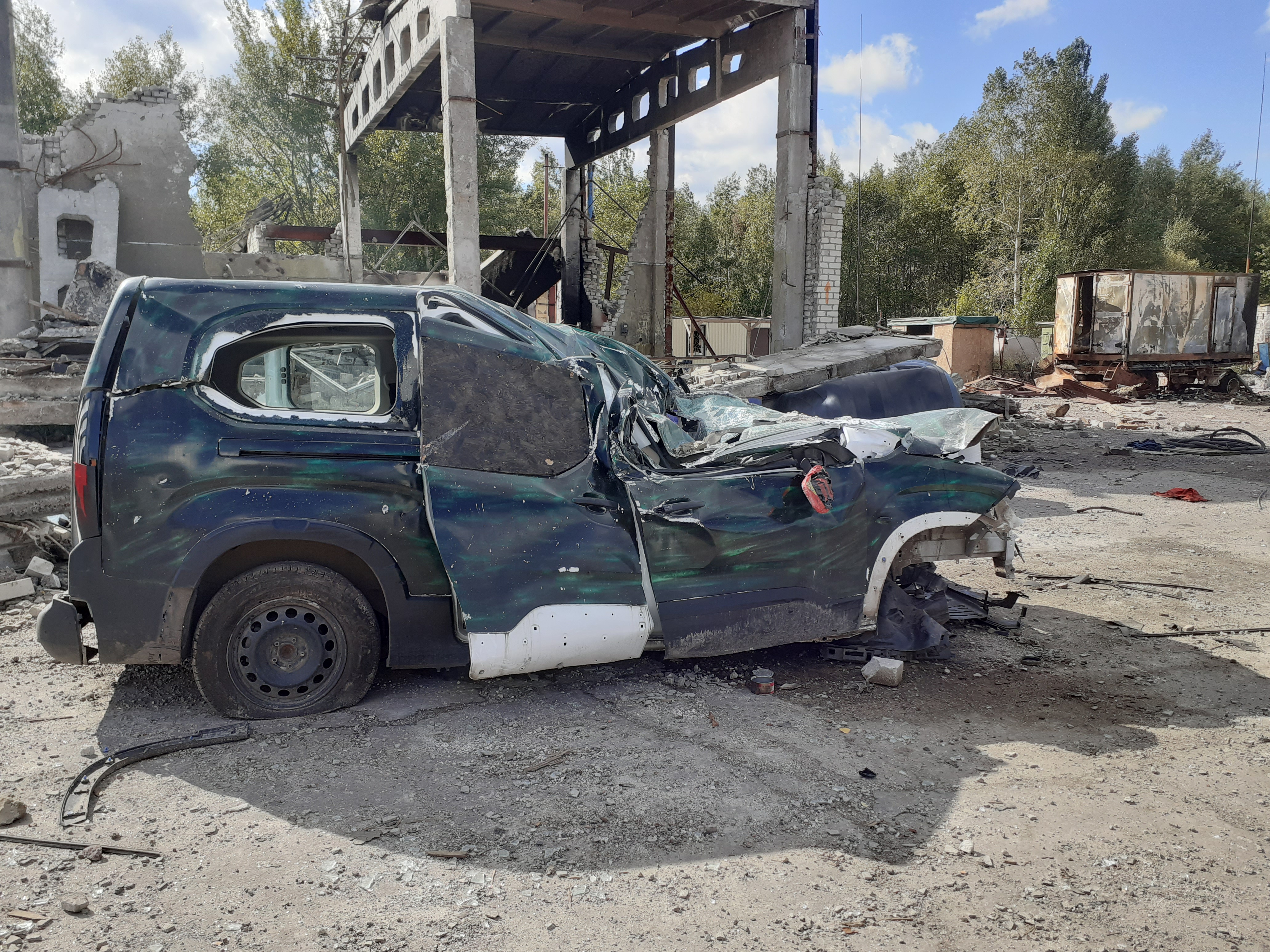
Third, the town's liberation after more than six months of Russian occupation provided investigators with direct access, facilitating comprehensive documentation of the crimes. The documentation conducted by Truth Hounds, a Ukrainian non-governmental organisation and partner of the NHC, provides extensive, reliable evidence. The organisation systematically recorded events, interviewed victims and witnesses, and collected video and photographic materials, maps, and detailed descriptions of detention sites.
The Balakliia situation provides insights into the Russian forces’ modus operandi and helps describe the broader consequences of the war on Ukrainian society.